Crafting a custom bark butter recipe for birds allows backyard naturalists to provide an energy-dense spreadable lipid supplement that rivals expensive commercial spreads. While originally popularized by commercial wild bird retail founders, hobbyists frequently struggle with balancing fat stability against avian safety. Understanding proper formulation prevents common backyard disasters such as spoiled tree trunks, melted plumage coats, and pest swarms.
Recent discussions across wild bird forums highlight stark differences between successful homemade mixes and dangerous yard experiments. On platforms like r/backyardbirds, experienced birders continually caution beginners against using commercial vegetable shortening or salted nut butters. Meanwhile, community members on localized wildlife rescue forums emphasize that direct bark smearing can permanently foul tree bark or attract nocturnal raccoons within hours.
Quick-Glance Field Summary
This field-tested spreadable bird butter utilizes clean rendered suet and unsalted peanut butter bound with coarse grain meal to maintain structure across variable winter temperatures. Applying the mixture into dedicated drilled feeding logs preserves plumage cleanliness and keeps garden trees free of rancid fat deposits.
- Primary Lipid Base: 1 cup rendered beef kidney suet or pure food-grade lard
- Secondary Lipid: 1 cup unsalted, additive-free, xylitol-free smooth peanut butter
- Structural Binder: 2 cups yellow cornmeal (medium or coarse stone-ground)
- Secondary Binder: 1 cup rolled oats (ground or whole quick oats)
- Absorbent Modifier: 1 cup unbleached all-purpose flour or whole wheat flour
- Safe Optional Calcium Booster: 2 tablespoons finely crushed, boiled eggshells
- Upper Application Temperature Limit: 50 degrees Fahrenheit (10 degrees Celsius)
- Hardware Standard: Drilled untreated cedar or pine logs suspended via 0.25-inch steel hardware or baffled poles
Lipid Chemistry: Rendered Beef Tallow Versus Commercial Shortening Hazards
The foundation of any wild bird spread rests on its fatty acid profile and melting threshold. Many online recipes carelessly suggest Crisco or hydrogenated vegetable shortening, yet forum contributors on r/birdwatching frequently warn of catastrophic plumage fouling linked to vegetable shortening. Hydrogenated vegetable oils soften significantly at lower temperatures than saturated animal fats, meaning an afternoon sunny spot will turn vegetable spreads into an oily glaze that rubs directly into breast feathers.
Avian physiology demands high-calorie saturated lipids during cold snaps when brown creepers, nuthatches, and kinglets burn significant body reserves overnight. Pure rendered beef suet, specifically hard kidney tallow, provides optimal energy density without unrefined moisture. When properly rendered twice, beef tallow hardens into a shelf-stable block that yields readily under bill pecks without liquefying on ambient surfaces.
If beef kidney fat is unavailable, pure unhydrogenated grocery lard offers an acceptable alternative lipid base. Never use bacon grease, poultry drippings, or salted pan renderings under any circumstances. These waste kitchen fats carry high sodium concentrations and chemical nitrates that tax avian renal systems, while chemical seasoning remnants can irritate avian digestive tracts.
How to Mix the Dough: Binders and Safe Additives
A successful spreadable mix requires an aggregate binder that prevents the fats from slumping off vertical surfaces. Yellow cornmeal forms the primary skeletal framework of the paste, giving wood-clinging species like downy woodpeckers purchase when their bills bite into the surface. Fine flours absorb free oils, transforming a sticky paste into a doughy, crumbly butter that cleaves neatly under bird pressure.
- Melt the rendered suet and natural peanut butter together over very low heat until fully liquified.
- Remove the lipid pan from the heat source before stirring in any dry ingredients.
- Slowly incorporate the yellow cornmeal to build a thick, granular slurry.
- Fold in the 1 cup of rolled oats, crushed eggshells, and whole wheat flour until the mixture resembles stiff cookie dough.
- Spoon the warm mixture into storage containers or silicone molds and allow it to solidify completely in a refrigerator.
Be exceptionally vigilant when purchasing peanut butter for wild birds. Check labels strictly to verify that the product contains zero artificial sweeteners like xylitol, which acts as a fatal neurotoxin to many animals. Peanut butter must also contain no added sugar, palm oil, or salt; look for single-ingredient jars containing only roasted peanuts.
| Fat-Paste Matrix | Spreadable Texture Binding | Target Avian Foragers | Bark Application Method |
|---|---|---|---|
| Pure Tallow Bark Butter | Thick, highly spreadable structural paste bound cleanly with yellow cornmeal. | Downy woodpeckers, nuthatches, creepers, and chickadees. | Pressed deep into rough oak, pine, or walnut bark crevices with a putty knife. |
| Commercial Melt-Resist Suet | Rigid, pre-molded hard blocks packed with binding wheat flour starches. | Cardinals, jays, starlings, and standard tree-perching birds. | Locked exclusively inside hanging wire cage feeders or wood boxes. |
Thermal Melt Thresholds and Plumage Contamination Risks
Physical fat contamination poses a grave hazard to backyard passerines that feed closely on high-fat treats. When soft butter coats an avian head or belly, it destroys the natural microscopic interlocking barbules of the contour feathers. Once feathers lose their structural cohesion, birds lose thermal insulation and water repellency, leaving them vulnerable to fatal hypothermia during wet winter storms.
Field ornithologists establish a strict upper ceiling of 50 degrees Fahrenheit for high-fat spread distribution. Above this ambient temperature, even firm tallow mixtures soften sufficiently to transfer onto the plumage of larger birds like red-bellied woodpeckers. When spring daytime highs consistently exceed 50 degrees Fahrenheit, store leftover mixture in the freezer and transition your yard stations to whole sunflower chips and dried mealworms.
A practical test for structural stability involves pressing your thumbnail into a chilled block of the finished mixture. If your nail slides easily into the paste and leaves greasy residue on your skin, the formula needs more dry grain binder. The butter should flake off under pressure rather than smear like soft room-temperature margarine.
Drilled Feeder Logs Versus Direct Bark Smearing: Forum Sanitation Hacks
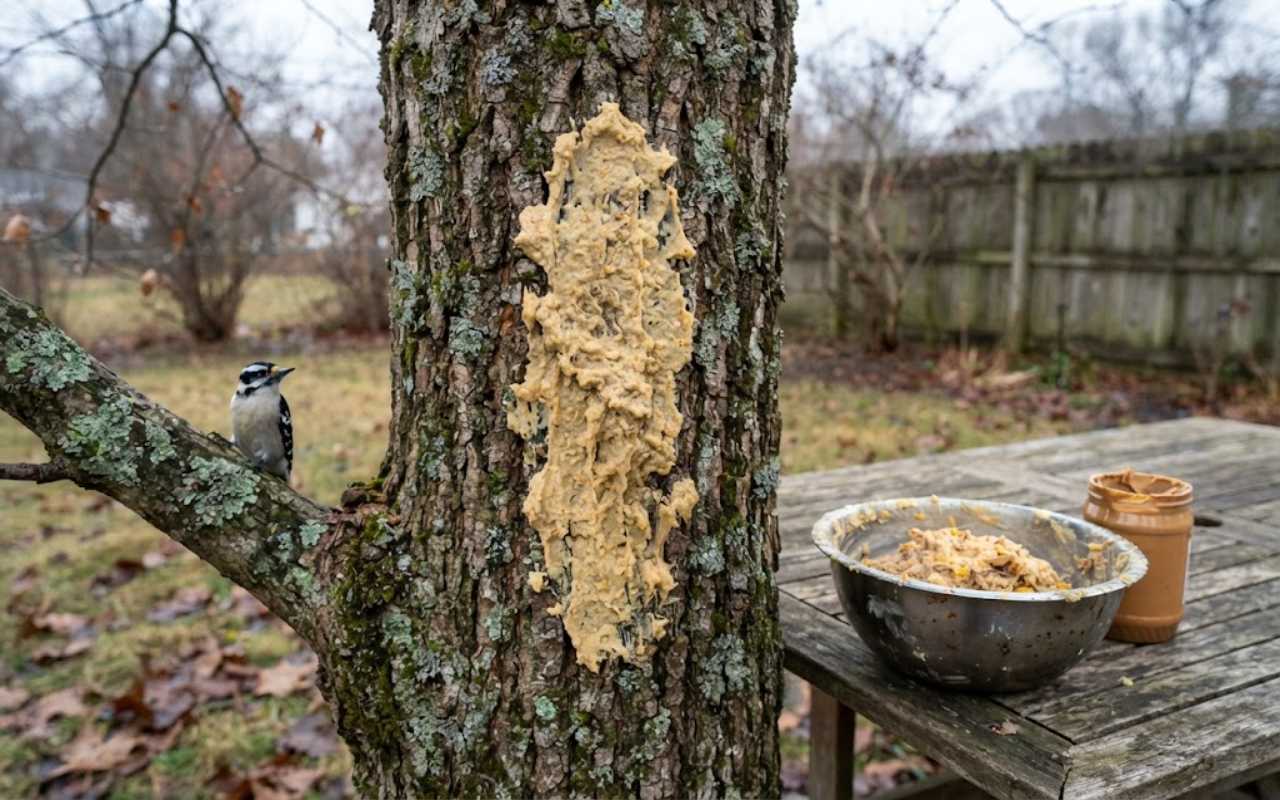
Although commercial marketing illustrates spreads applied directly onto live tree trunks, experienced backyard birders strongly advise against this practice. Natural tree bark possesses intricate furrows where fats easily settle, trap moisture, and collect airborne molds. Over time, recurring grease spots discolor ornamental yard trees, strip delicate outer bark layers, and create persistent fungal reservoirs right outside your windows.
A widespread crowd-sourced hack from long-time forum contributors involves hanging dedicated drilled feeder logs made from fallen branches. Choose an untreated oak, cedar, or birch log roughly 3 to 4 inches in diameter and 12 to 18 inches in length. Bore multiple 1-inch holes halfway through the wood using a spade bit, spacing the cavities several inches apart around the log circumference.
- Drill cavities at a slight upward angle toward the center to prevent falling rain from soaking the food.
- Install a heavy-duty screw eye into the top face of the branch for hanging on a baffled shepherd crook.
- Pack the drilled openings flush with the bark butter using an ordinary putty knife.
- Scrape away excess fat around the cavity rims to ensure landing birds touch only natural, untreated wood.
- Remove old residual food monthly, scrub the wood with a 9:1 water-to-bleach solution to kill deep-seated spores, and sanitize the dry log using a stiff wire brush before refilling.
Using drilled logs also isolates the feeding site, protecting bird visitors from ambush predators. When placed 10 to 12 feet away from low ground cover, small songbirds have unobstructed sightlines while feeding on vertical perches.
Mammalian Deterrence and Spoilage Control Against Aflatoxin Growth
Any high-protein fat spread acts as an irresistible olfactory beacon for raccoons, Virginia opossums, and eastern gray squirrels. If a feeder log hangs freely from a tree branch without protection, nocturnal mammals will readily consume an entire day of fresh butter within minutes. Suspend all butter logs from sturdy metal poles protected by standard 18-inch torpedo baffles mounted at least 4.5 feet above the ground.
If you choose to use capsaicin as a mammalian deterrent, structural deployment matters immensely. Avian species lack mammalian TRPV1 pain receptors and cannot register the thermal heat of chili peppers, which is why commercial manufacturers safely offer fat-bound pepper options like Wild Birds Unlimited Hot Pepper Bark Butter®.
However, home-crafters must never mix dry, loose chili powders or fine pepper flakes into their homemade mixes. On windy days, loose powder can easily blow into a bird’s eyes or respiratory tract, causing mechanical irritation. If you use capsaicin to deter squirrels, always use liquid pepper oil concentrates or pre-formulated hot pepper additives that bind completely into the liquid fat base without creating airborne dust.
Moisture management remains your final critical defensive protocol when storing and dispensing bulk butter. Improperly stored cornmeal, peanuts, and oat meals are susceptible to Aspergillus flavus, an environmental fungus that produces toxic aflatoxins. Always inspect raw components for musty odors before cooking, divide batch yields into airtight freezer bags, and consume each thawed portion within five days of outdoor deployment.